
FGI Groups supplies bullet resistance glass in Pakistan for banks, currency exchanges, government buildings, embassies, armoured vehicles, and high-security commercial installations. Bullet resistance glass — also called ballistic glass or bulletproof glass — is a multi-layered composite of glass sheets and polycarbonate or PVB interlayers that absorbs and dissipates the kinetic energy of projectiles, preventing penetration. We manufacture bullet resistant glass to specific protection levels and custom dimensions, supplying directly to security contractors, architects, and facility managers across Pakistan.
Standard glass shatters on bullet impact — fragments fly inward, causing injury before the projectile even penetrates. Bullet resistance glass stops this through layered construction: a hard outer glass layer flattens and slows the projectile on impact, while softer inner interlayer material — PVB or polycarbonate — absorbs and spreads the remaining energy across the panel. The glass cracks but does not penetrate. Higher protection levels add more layers, increasing thickness and stopping power.
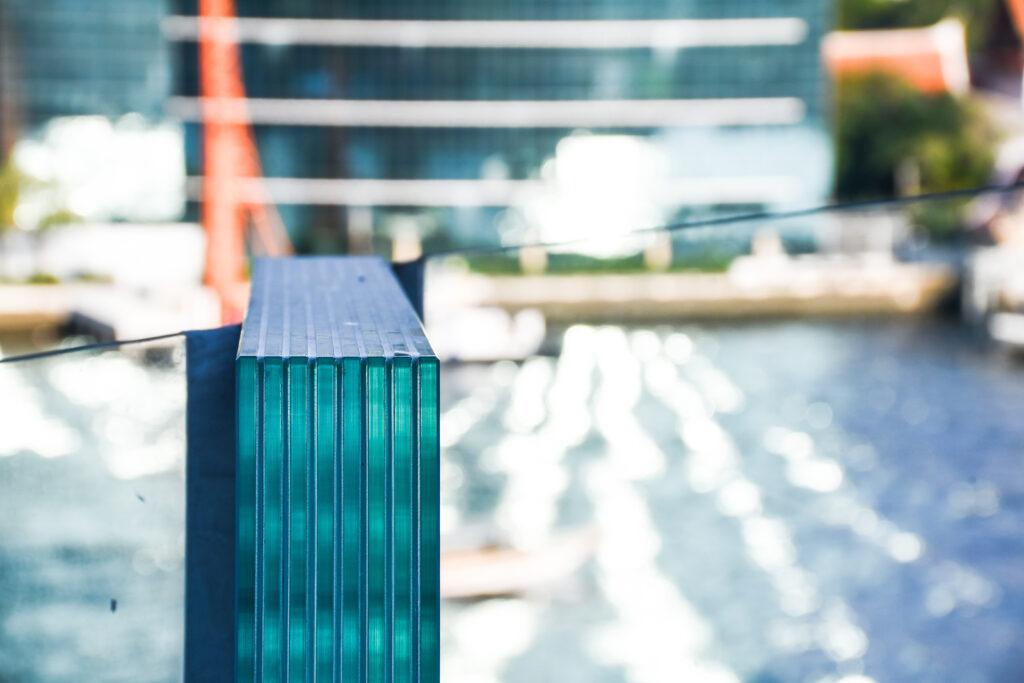
FGI Groups manufactures bullet resistance glass using laminated glass construction with multiple glass plies and interlayers — processed in-house at our Lahore facility and manufactured to your specified protection level and panel dimensions.
Bullet resistance glass is rated by the threat level it stops. International standards — UL 752 (USA) and EN 1063 (Europe) — classify protection levels by weapon type and ammunition. FGI Groups supplies glass across protection levels for different security requirements:
| Level | Standard | Threat Stopped | Typical Application |
|---|---|---|---|
| Level 1 / BR2 | UL 752 / EN 1063 | 9mm handgun | Bank teller windows, cash counters |
| Level 2 / BR3 | UL 752 / EN 1063 | .357 Magnum | Currency exchange, jewellery stores |
| Level 3 / BR4 | UL 752 / EN 1063 | .44 Magnum | Embassies, VIP offices |
| Level 4 / BR5 | UL 752 / EN 1063 | 5.56mm rifle | Government buildings, police facilities |
| Level 5 / BR6 | UL 752 / EN 1063 | 7.62mm rifle | Military, armoured vehicles |
| Level 8 | UL 752 | 7.62mm AP rifle | High-threat military & government |
Contact FGI Groups with your required protection level and application — we specify the correct glass construction and thickness for your security requirement.
Banks & Financial Institutions
Teller counter windows, cash handling enclosures, ATM surrounds, and vault observation panels. Level 1–3 protection handles most banking security requirements in Pakistan.
Currency Exchanges & Jewellery Stores
Counter glazing and display case security glazing for high-value retail and money exchange businesses. Forced entry resistance as well as ballistic protection.
Government Buildings & Embassies
Reception counters, perimeter glazing, and secure room panels for government facilities, embassies, consulates, and diplomatic offices. Higher protection levels specified to threat assessment.
VIP Offices & Executive Facilities
Boardroom glazing, private office partitions, and executive suite security glazing for high-net-worth individuals and corporate security requirements.
Armoured Vehicles
Windscreens, side windows, and rear screens for armoured personnel carriers, VIP transport vehicles, and cash-in-transit vehicles. Curved and flat panels processed to vehicle specifications.
Police & Detention Facilities
Interview room glazing, custody area screens, and observation windows for police stations and detention facilities.
| Property | Specification |
|---|---|
| Construction | Multi-layer laminated glass + PVB / polycarbonate interlayers |
| Minimum thickness | 20mm (Level 1) |
| Maximum thickness | 70mm+ (Level 5–8) |
| Standard compliance | UL 752, EN 1063 |
| Spall protection | No-spall variants available |
| Sizes | Custom to project drawings |
| Finish options | Clear, tinted, UV-filtered |
A question FGI Groups gets from architects and security consultants: can standard laminated glass stop a bullet? The short answer is no. Standard laminated glass holds together when broken — it does not stop penetration from a firearm. Bullet resistance glass requires a specific minimum total thickness, a specific interlayer composition, and tested construction to a rated protection level. Specifying standard laminated glass in a security application is a specification error that will fail ballistic testing.
FGI Groups manufactures both — and can advise on the correct specification for your application.
→ View Laminated Glass — for non-ballistic safety and security applications
→ View Tempered Glass — for structural and architectural glazing
→ View Smart Switchable Glass — for privacy glazing in secure facilities
→ Contact FGI Groups for a security glazing specification
Bullet resistance glass price in Pakistan depends on protection level (UL 752 / EN 1063 rating), panel size, thickness, and quantity. Entry-level counter glazing (Level 1–2) is priced differently from high-protection rifle-rated panels. Contact FGI Groups with your required level, dimensions, and quantity for an accurate price within one working day.
Bullet resistance glass is made of multiple layers of glass bonded with PVB (polyvinyl butyral) or polycarbonate interlayers. The hard glass layers absorb and flatten the projectile on impact; the softer interlayer material dissipates the remaining energy. Higher protection levels use more layers and greater total thickness — typically ranging from 20mm at Level 1 to over 70mm at Level 5–8.
The highest commercially available protection levels — UL 752 Level 8 or EN 1063 BR7 — stop armour-piercing rifle rounds. FGI Groups supplies glass up to Level 5–6 for most commercial and government security requirements. Higher threat levels are available on request for military and specialist applications.
Yes. FGI Groups processes bullet resistant glass for armoured vehicles — flat and curved panels for windscreens, side windows, and rear screens. Vehicle glass is manufactured to the same protection level ratings and processed to your vehicle’s specific dimensions.
Yes. Bullet resistant glass for buildings, banks, offices, and security facilities is legal to specify and install in Pakistan. Armoured vehicle glazing for private use may require specific approvals depending on vehicle type and use. FGI Groups supplies to licensed security contractors, banks, and government facilities.
UL 752 is the American standard; EN 1063 is the European standard. Both rate bullet resistant glass by protection level — the weapon and ammunition the glass must stop — but use different level numbering. Most specifications in Pakistan reference UL 752 or EN 1063, and FGI Groups can manufacture to either standard.
Bullet resistant glass thickness starts at approximately 20mm for Level 1 (9mm handgun protection) and increases to 50–70mm or more for higher rifle-rated levels. Thickness depends on the number of glass plies and interlayer configuration required for the specified protection level.

A type of safety glass that is heat-treated for extra strength and durability. It is shatter-resistant and ideal for doors, windows, and modern interiors.

Made by bonding two or more glass layers with a plastic interlayer for safety. It holds together when shattered, making it perfect for skylights, facades, and automotive use.
Two glass panes separated by an air or gas-filled gap for insulation. It improves energy efficiency, reduces noise, and enhances indoor comfort.